Now available · v1.8.0 · Personal & Team licences

Document, validate, and migrate the real rules behind your database schema.

Quellery inspects your live database and lets you build a validated conceptual model on top of it — documenting what's intended, catching what's missing, and generating the SQL to bring the two into line.

Latest release: 1.8.0
№ 01
Discovery

Discover what you actually have.

Most databases accumulate years of decisions — some deliberate, some accidental. Nullable columns that should never be null. Foreign keys that exist by convention but were never declared. Columns that follow patterns no one wrote down.

Reads your live schema. Then reads between the lines.

Quellery connects to your live database and reads the physical schema: every table, column, key, index, and constraint. But it doesn't stop at what's declared.

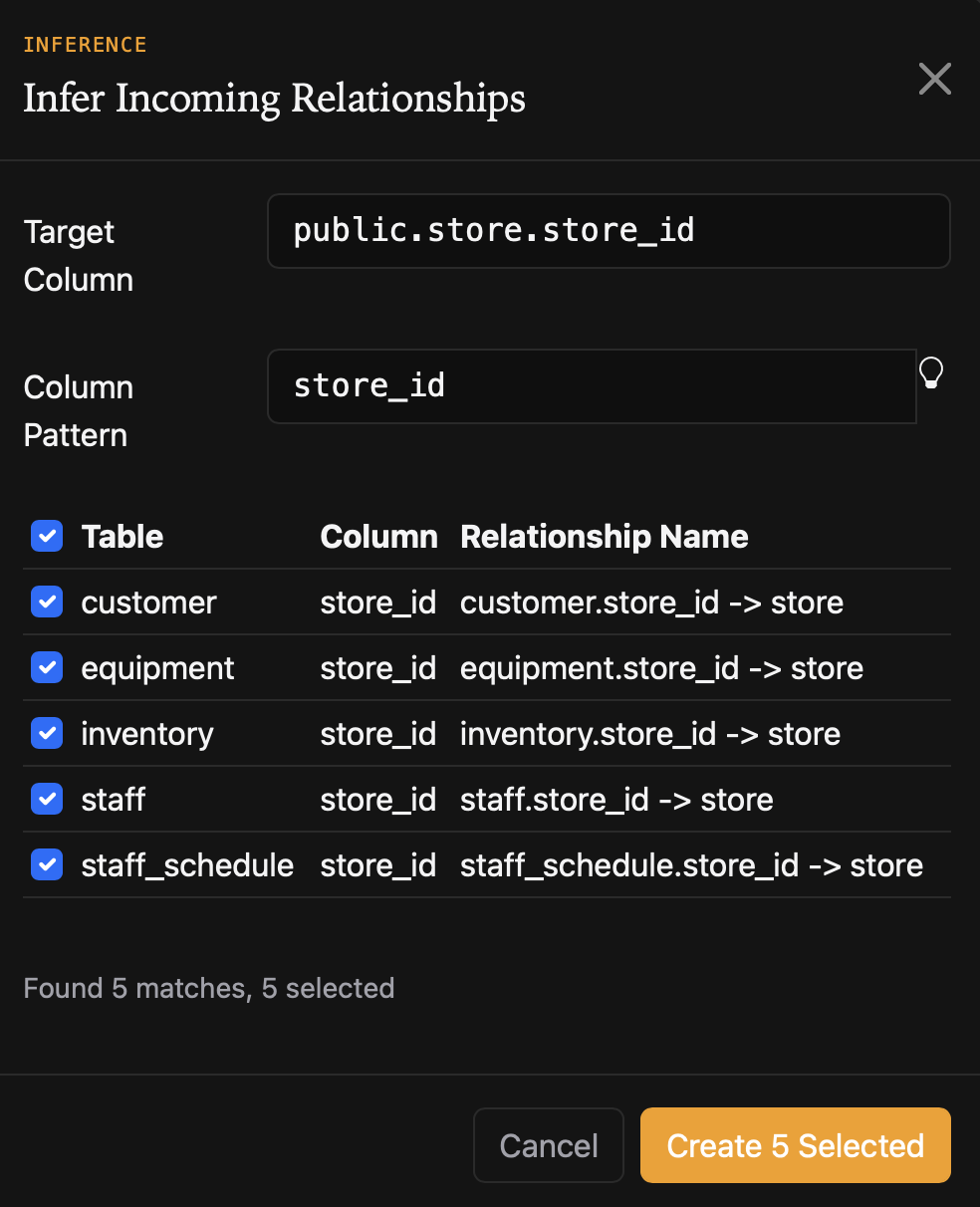
It analyses your actual data to surface what's implicit — inferring naming conventions, suggesting missing relationships, discovering functional dependencies, and finding groups of columns that are always null together.

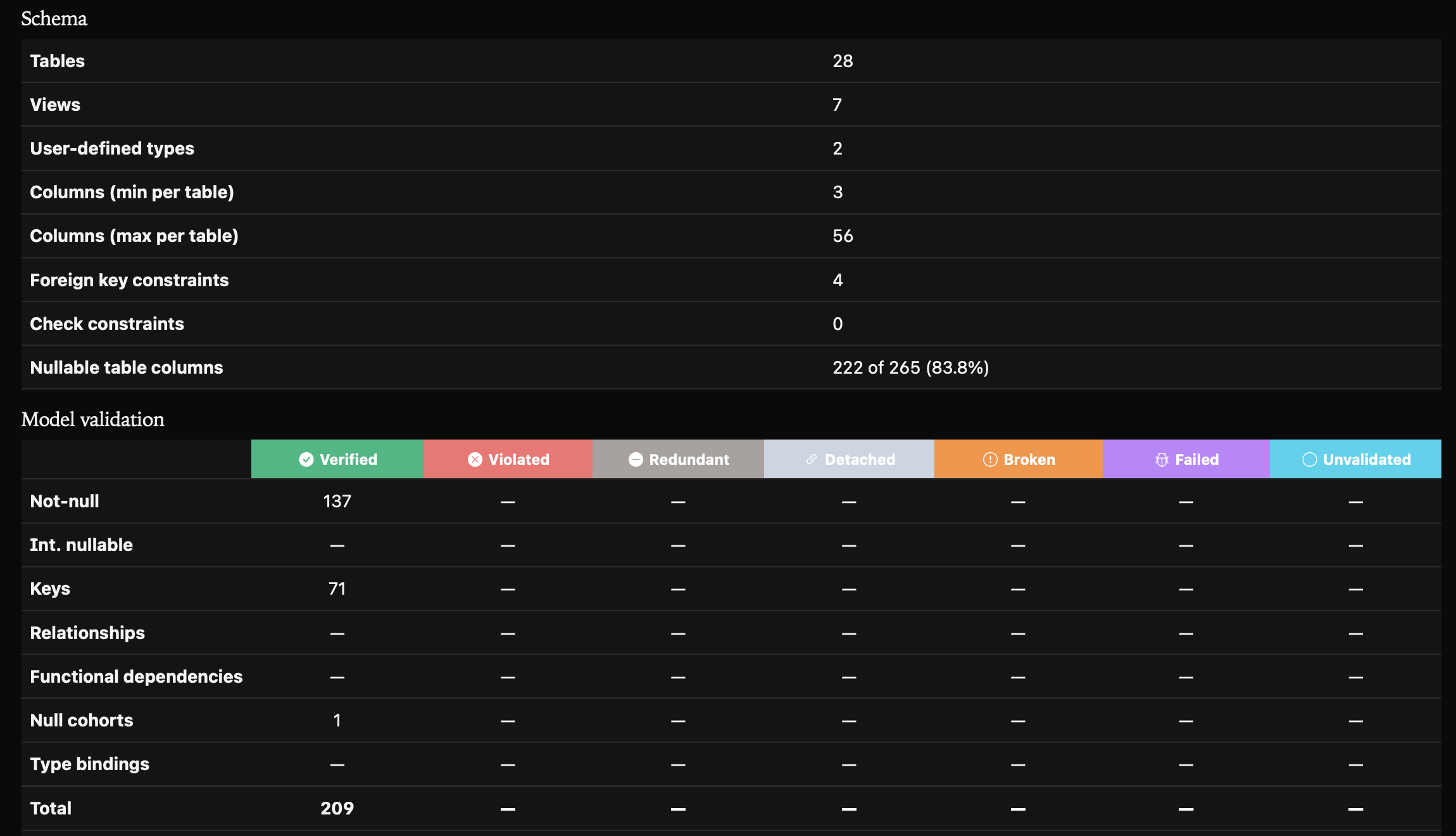
Quellery schema statistics: table counts, column ranges, foreign key totals, and a validation results matrix summarising verified and violated rules
№ 02
Modelling

Build your conceptual model, iteratively.

You don't need to model everything at once. Start with one table. Mark which columns should be required. Document a missing foreign key. Note that a column contains email addresses.

Every declaration is continuously validated.

Quellery validates your declarations against the live schema and flags mismatches immediately. As your understanding deepens, layer on more: define functional dependencies that reveal normalisation issues, identify null cohorts that suggest table extraction, create model types that constrain column values.

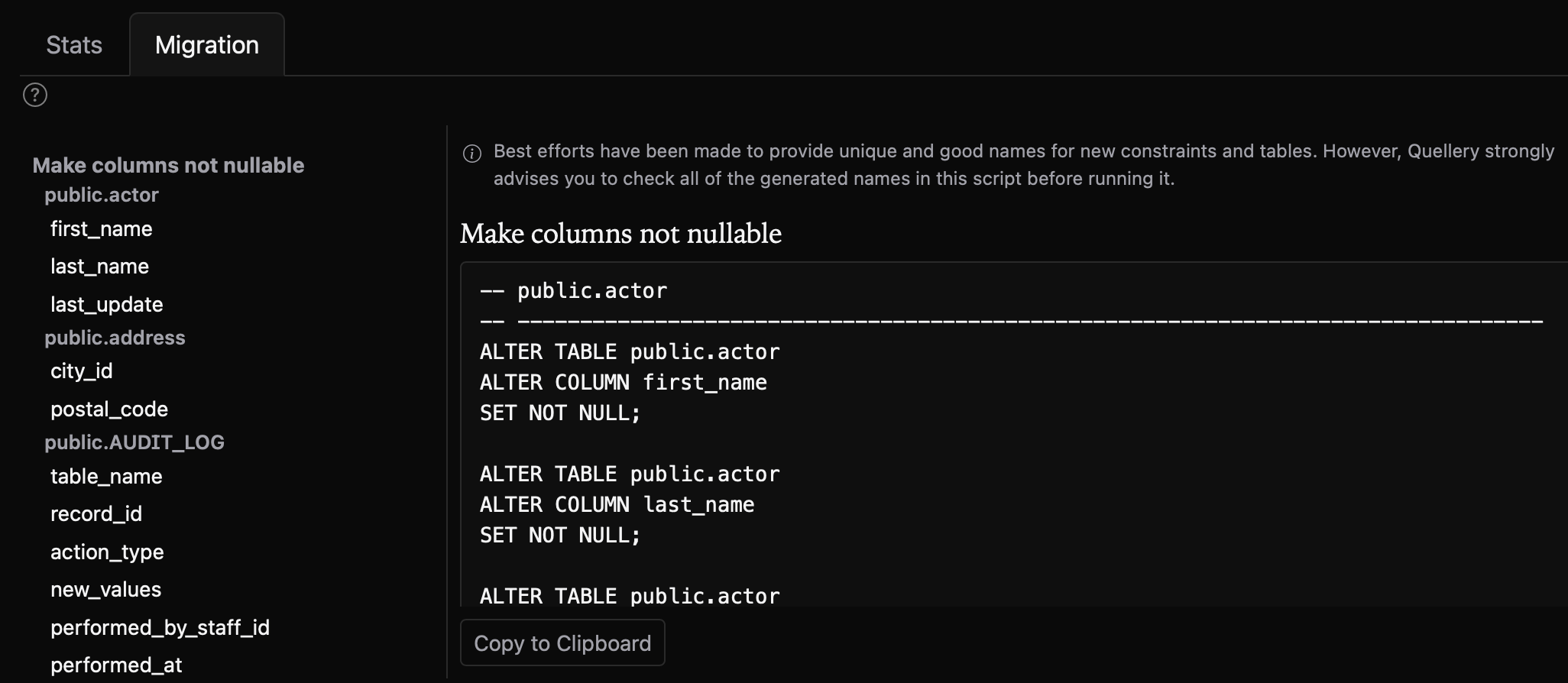
When the model is ready, Quellery generates the SQL migration scripts to bring your physical schema in line — NOT NULL, FOREIGN KEY, CHECK, unique indexes, and table extraction for null cohorts.

Because models and databases are independent, you can point the same model at different database connections — dev, QA, production — and validate each environment against the same set of expectations.

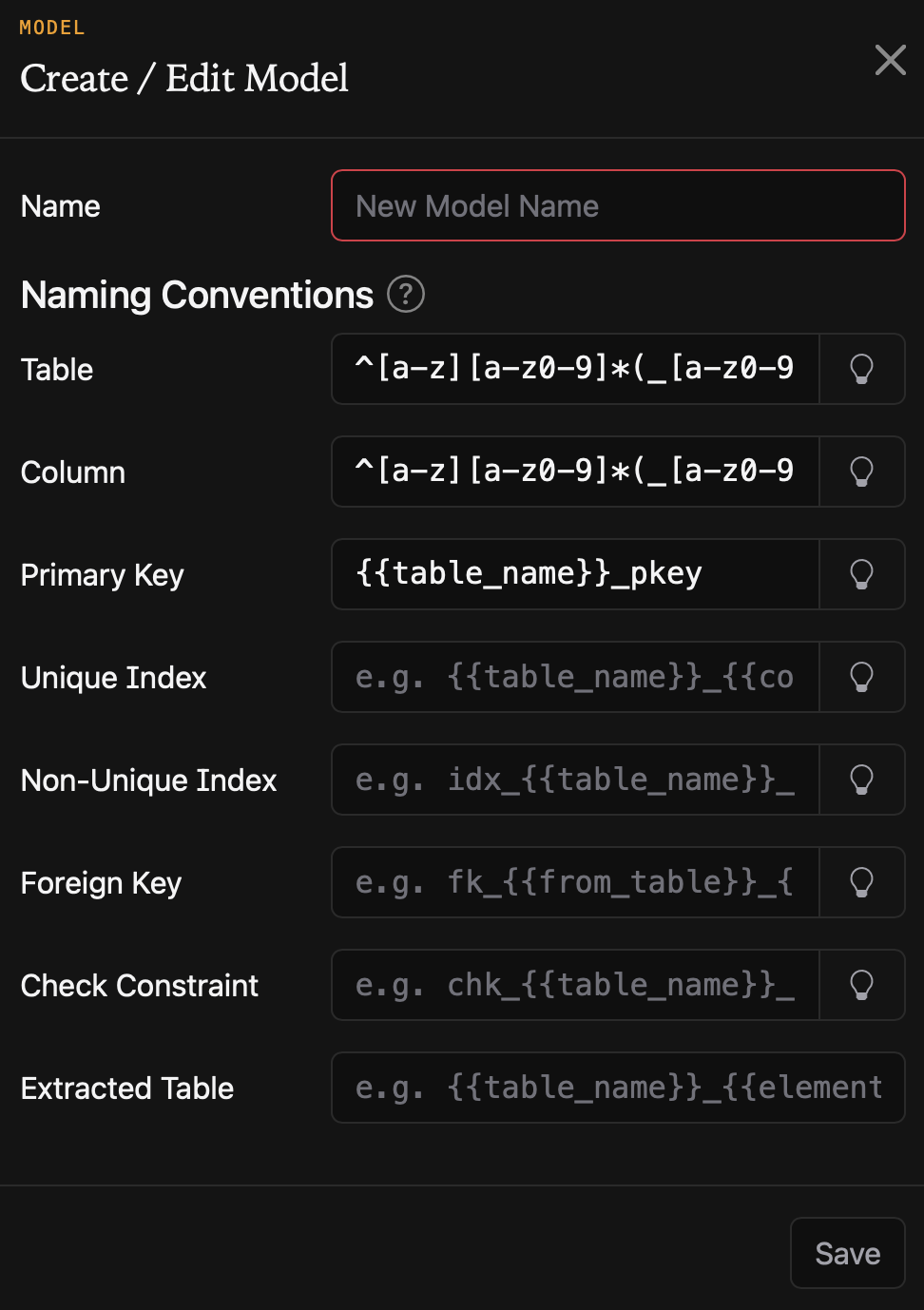
Quellery model creation form with naming convention templates for primary keys, unique indexes, and foreign key columns
№ 03
Capabilities

What you can model.

01

Nullability constraints

Mark columns as intentionally nullable or required, then validate that the schema matches your intent.

02

Keys & relationships

Document primary keys, unique indexes, and foreign key relationships. Discover missing ones automatically.

03

Functional dependencies

Define and infer functional dependencies to uncover hidden normalisation issues in your data.

04

Null cohorts

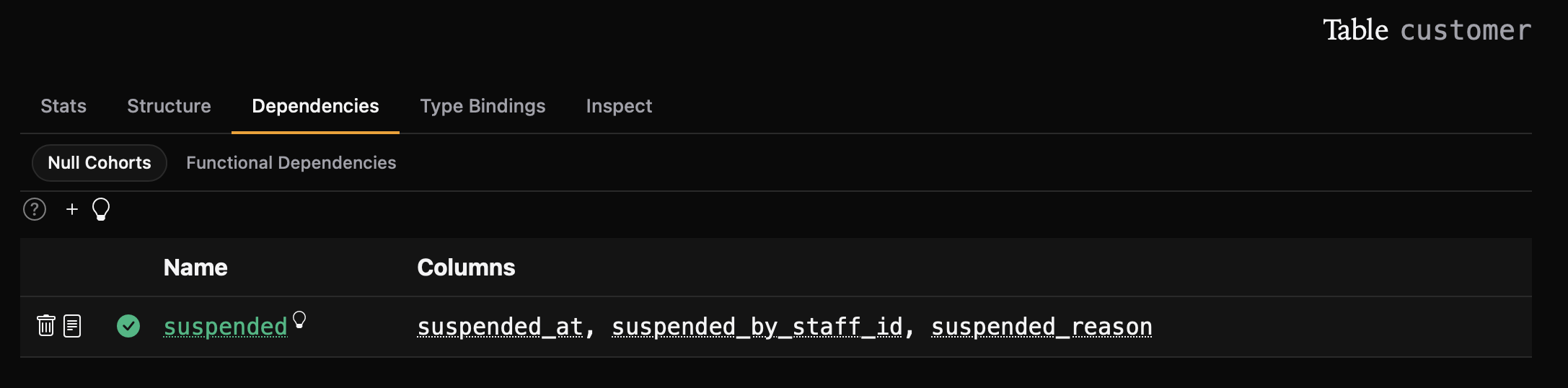
Find groups of columns that are always NULL together — candidates for extraction into separate tables.

05

Model types

Define regex patterns, enumerations, and tuple patterns, then assign them to columns for constraint validation.

06

Naming conventions

Infer and enforce naming conventions for primary keys, indexes, foreign keys, and check constraints.

07

Notes & institutional knowledge

Attach notes to any model or schema element — turning tribal knowledge into context that survives team changes.

08

Migration scripts

Generate SQL migration scripts to bring your physical schema in line with your conceptual model.

09

Continuous validation

Quellery validates your model against the live database on a configurable interval, flagging violations in real time.

№ 04
Who it's for

Made for people who have to learn the system they inherited.

Quellery is for developers who need to learn and document the systems they work on, and for teams that want to collaborate on improving database design. One person can get real value from it on their own — and the value compounds when a whole team shares a model.

The new arrival

"I've just inherited this schema. Where do I even start?"

New job, new project, or a corner of the system you've never touched. Quellery lets you explore tables and columns, capture what you learn as notes and model elements, and validate your growing understanding against the live data — turning a week of guesswork into a durable record you can come back to.
The modernisation team

"Ten years of decisions, and no one remembers which were deliberate."

Nullable columns that shouldn't be, undeclared foreign keys, magic numbers no one remembers. Quellery lets your team document what you discover as you discover it, validates those decisions against the live data, and generates the migration scripts to make the database enforce what the app has always assumed.

The auditor

"Third-party system, acquired product, or a corner no one's touched in years."

Every team member pokes at it and builds their own mental model. Quellery gives you one shared model that captures what's actually true, flags where the schema disagrees, and survives after the person who figured it out moves on.

The knowledge keeper

"The people who know why status = 7 means 'archived' won't be here forever."

Quellery turns tribal knowledge and undeclared guarantees into structured, validated model elements — notes on columns, enumerations bound to types, relationships and functional dependencies declared explicitly — so the whole team agrees on what's real and the next hire can read the model instead of chasing Slack threads.

№ 05
See it in action

From inference to migration.

From discovering hidden relationships to generating migration scripts, Quellery helps at every stage.

№ 06
Supported databases

Connect to the databases you already use.

PostgreSQL
jdbc 42.7.9
MySQL
bring your own driver
H2
in-memory & file

Coming soon

Oracle SQL Server MariaDB SQLite CockroachDB Snowflake
№ 07
Run anywhere

Up and running in seconds.

Quellery ships as a single Docker image — one docker compose up and you're inspecting schemas. Prefer not to use Docker? Download the fat JAR and run it directly with Java.

See setup instructions